What Can Line Marking Paint Be Used For
What Can Line Marking Paint Be Used For?
Most people search for line marker paint with a job already in mind, but it is important to remember that it is far more than just paint; it is an essential safety, regulatory and organisational tool. Used across many applications from sports to heavy-industry, the true expertise is knowing what surface, regulations and environment determine what paint should be used.
Line marking paints can be used for anything from permanent road markings to temporary event layouts. Understanding what you are marking, the surface and how long it needs to last is essential for a durable, compliant and cost-effective result.
Below we will take a closer look at the most common uses for line marker paint and explain the decision-making factors for each job.
Surface Type For Line Marker Paint
Choosing the wrong paint can lead to flaking, fading and poor visibility as different surfaces will react to paint in very different ways. Getting the surface right is the key to strong adhesion and long lasting wear.
Hard Surface Line Marking Paint
For sealed indoor floors and surfaces such as concrete, asphalt, tarmac, hard surface paints are engineered for reliable adhesion and resistance to wear and tear. These paints are made to form a secure bond that can resist heavy abrasion, foot traffic and cleaning agents.
Professional hard surface paints use fast drying acrylics, which is important for minimising downtime and for reopening of recently treated areas.
Grass Line Marking Paint
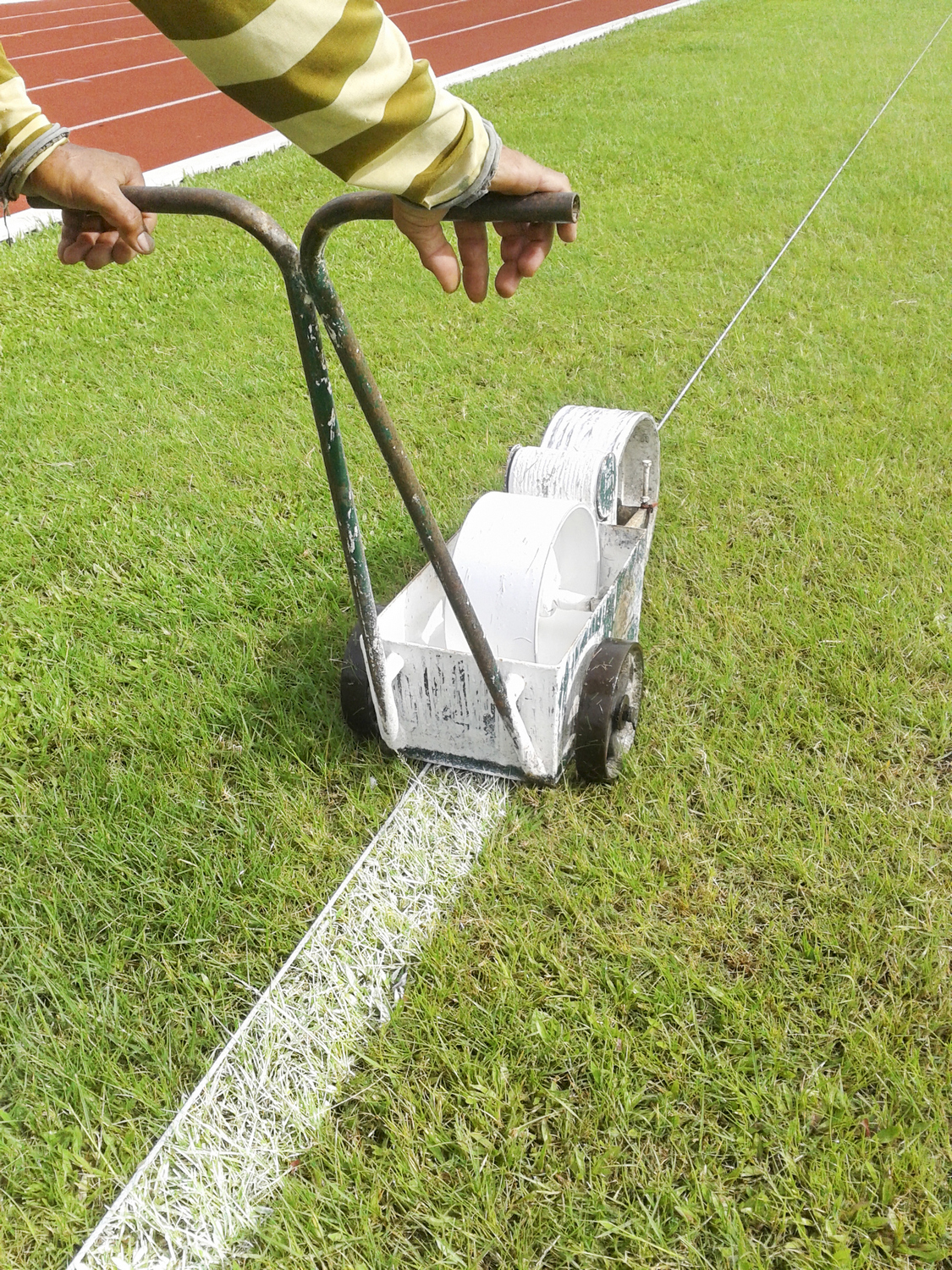
For temporary outdoor layouts and sports, we advise customers to use a dedicated line marker paint for grass. These paints are almost exclusively water based and biodegradable while remaining non toxic to the grass underneath. This is the standard choice for:
Professional Sports Pitches: Football, rugby and other training pitches
Cricket Squares and Outfields: Typically used for for defining boundaries
Temporary Outdoor Events: Marking stall positions, stages and access routes
For grounds teams who regularly re-mark these grass paints are easy to remove and fade naturally when they are no longer needed.
Artificial Surface Line Marking Paint
Artificial turf surfaces don’t absorb paint like natural grass, they require a specific, highly-flexible paint. Standard paints risk cracking or damaging the synthetic fibres, compromising the structure of the playing surface.
Specialist paint that is designed to bond to artificial turf are typically used on 3G and 4G football pitches, MUGAs (Multi-Use Games Areas), and artificial training surfaces.
Applying Line Marker Paint
Now you understand the critical factor of surface, the next thing to take into consideration is the environment and any required safety standards that need to be met.
Line Marker Paint For Car Parks
Car parks are high wear areas and are subject to constant abrasion from vehicles. The paint must support visible and clear layouts for parking bays, direction arrows and specific standards for disabled spaces.
By incorporating reflective elements such as glass beads, the paint can remain visible in poor light conditions and have a direct impact on pedestrian and driver safety.
Sports Ground Line Marking Paint
Line marker paint is about absolute clarity in sports environments. Professional grounds teams use precision line marking machines to meet the exact measurements set by FIFA and RFU across competition pitches, athletic tracks and multi-sport school grounds. Lines must be straight and uniformly dense, making precision non-negationable.
Warehouse & Industrial Line Marking Paint
Line marking paint is a primary control measure across logistics and heavy industrial environments. Paints made from epoxy or highly durable polyurethane are specifically chosen for their resistance to heavy loading. Markings are used to clearly show walkways, pedestrian routes, forklift zones and vehicle transit areas.
Line Marker Paint by Colour
Colour is a critical component to the visual language of safety and direction and can communicate immediate instructions or warnings.
Yellow is often used for caution and hazard markings, while white is often used to convey non-hazardous messages. Red is a universal safety colour for fire escape access and fire equipment and blue is used for information and service such as disabled parking spaces, service access zones and information points.
Choosing The Right Line Marker Paint
The right line marker paint is a long-term investment and is a choice that can be calculated using the following three factors:
The Surface: If the surface is made from concrete you’ll be looking at hard surface paints, if you’re applying paint to turf then you’ll find what you need in our grass paints category.
The Environment: If you are treating artificial turf then you will need a highly flexible paint that will not create any damage.
The Lifespan: Is the paint intended to last several days or several years.
Focusing on these three points ensures your choice will provide durability, performance and visibility, reducing the need for costly and disruptive works over time.